1
Choose the collection
Select the Stic-a-Ling resource that matches the nursery routine, starting with Circle Time.
Stic-a-Ling helps children with English as an additional language feel welcomed, understood and included in everyday nursery routines through familiar-language audio and child-friendly resources.
Currently developing the Arabic Circle Time pilot edition.
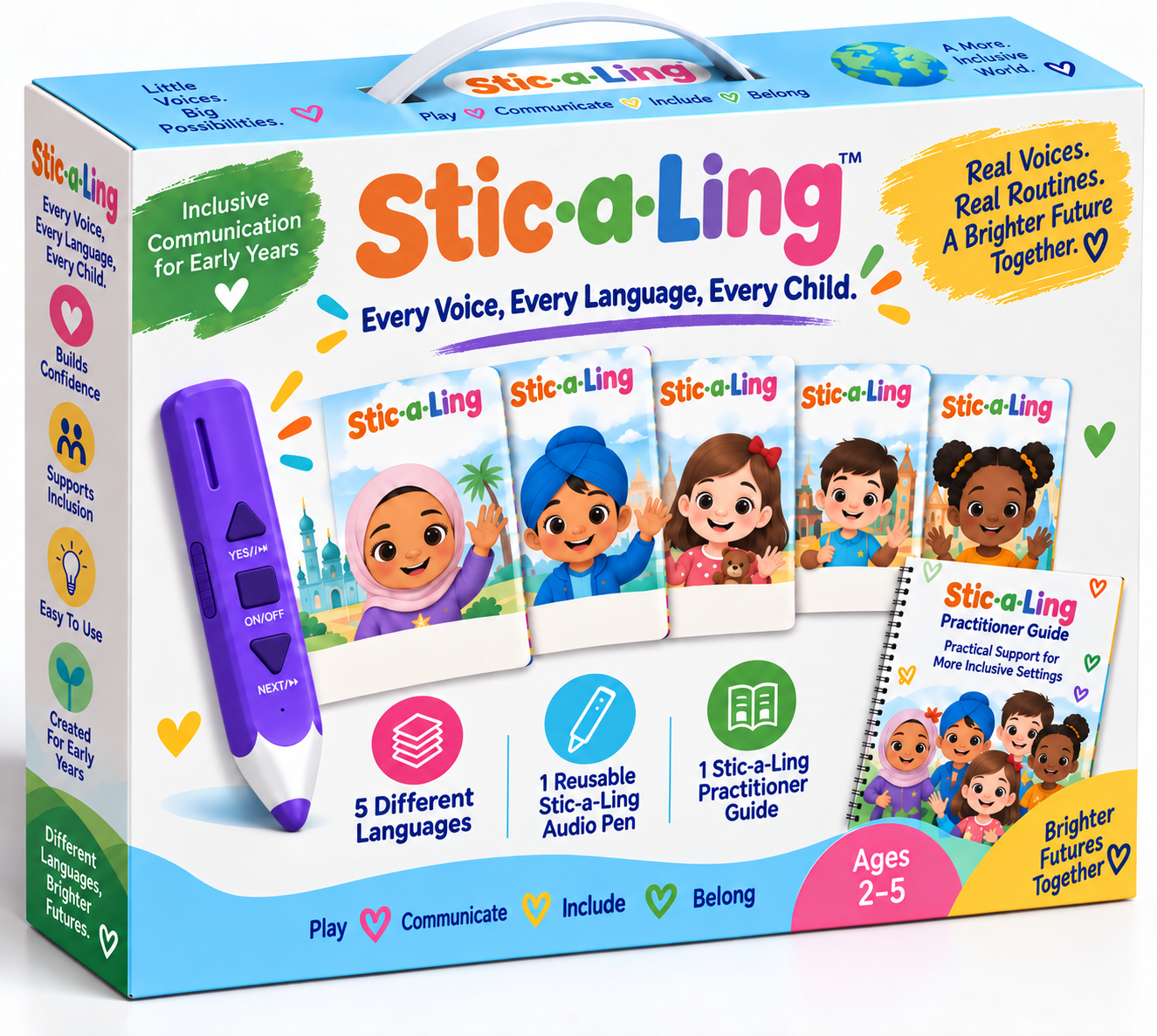
Imagine arriving at nursery and not understanding the words around you. Stic-a-Ling brings a child’s familiar language into the routines where belonging begins.
Stic-a-Ling is not designed to teach children lists of vocabulary. It focuses on the short, functional communication children need to join in, respond, connect and understand what is happening around them.
Built around real nursery interactions rather than standalone lessons.
Home languages are recognised as part of the child’s identity and experience.
Resources are organised around familiar moments such as circle time and play.
Simple interactions support children to listen, recognise and eventually use the resource more independently.
The reusable audio pen works with coded Stic-a-Ling pages so children and practitioners can hear the selected phrase in the featured language.
Select the Stic-a-Ling resource that matches the nursery routine, starting with Circle Time.
Touch the coded page using the reusable Stic-a-Ling audio pen.
The phrase plays in the child’s familiar language and can be used naturally within the routine.
Using familiar languages to support participation, communication and belonging in early-years routines.
Each starter set includes one core Practitioner Guide. Language-specific pronunciation and reference pages can reflect the languages selected by the setting.
This is how the audio pen sounds in the room: a short, familiar phrase in the child’s own language.
Arabic Circle Time (prototype)
Each collection focuses on the communication children encounter in a familiar early-years routine.
Simple phrases that help children participate in greetings, group interaction and everyday circle-time communication.
Communication for joining, sharing and playing alongside others.
Useful phrases for outdoor routines and shared exploration.
Communication around eating, choosing, requesting and responding.
Support for the moments when children move from one part of the day to another.
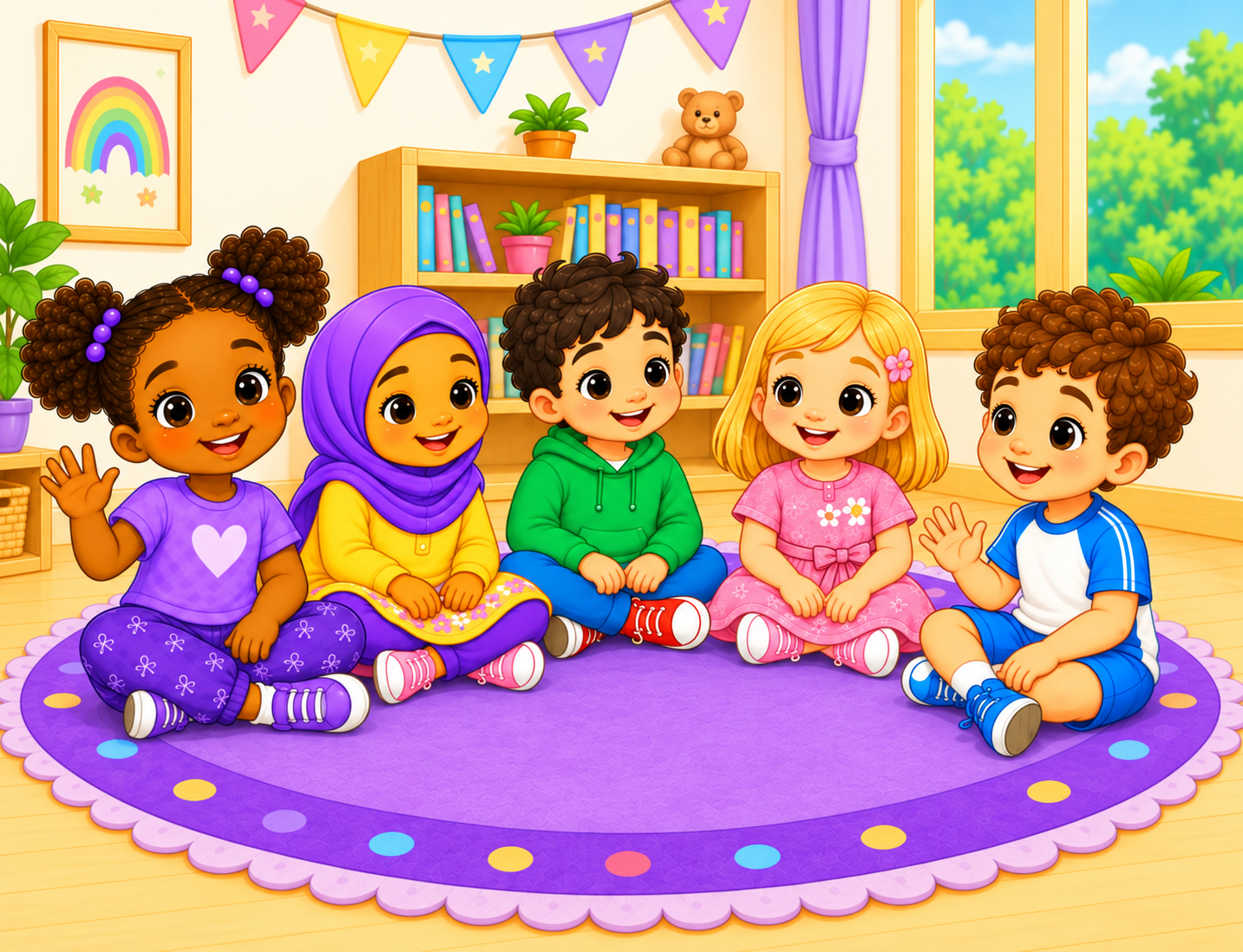
Stic-a-Ling is being developed as an inclusion and communication resource for organisations supporting young children, not as a consumer language-learning toy.
For settings welcoming children with different home languages.
Designed to fit within familiar routines rather than create another lesson to deliver.
A practical communication resource that can sit alongside professional language and communication support.
Potential support for inclusion initiatives across early-years provision.
No. It is not designed to teach lists of vocabulary. It supports the short, functional communication children need to join in, respond and connect during real nursery routines.
One reusable audio pen, a minimum of 5 language editions chosen by your setting, and one Practitioner Guide. You can add compatible language editions later.
Arabic is our prototype language and is not the final range. Pilot registrations will show us which languages settings need most, and that evidence will guide the first production languages.
Nurseries and preschools, early-years practitioners, SALTs and local authorities. It is an inclusion and communication resource for professional settings, not a consumer toy.
No. Registration is an expression of interest and does not create a purchase commitment.
Selected settings help us understand usability, language demand, child engagement and how the resource fits into everyday practice.
We are inviting selected early-years settings to register interest in testing Stic-a-Ling. Pilot settings will help us understand usability, language demand, child engagement and how the resource fits into everyday practice.
Your responses will help determine the first production languages, the most useful 5-language starter combinations and which collections we should build next.
Prefer a full page? Open pilot registration.